
Hackathon for Social Good
The annual flagship hackathon where developers, designers, and nonprofits build software that ships
A hackathon for social good isn't just a hackathon with a charitable theme — it's an event where the projects keep running after the demo ends. Most hackathons celebrate the prototype. Opportunity Hack celebrates what happens after the prototype: the nonprofit deploying the tool, the volunteers continuing to maintain it, the staff hours saved every week from then on.
We've been running this model since 2013. Over 3,000 developers, designers, and engineers have built software for more than 200 nonprofits across our weekend hackathons and the year-round Founding Engineer program that follows. The annual flagship event lands each fall at ASU in Tempe, Arizona — the next one is November 14-15, 2026.
This page is the front door for everyone who wants in: developers, mentors, judges, sponsors, and nonprofits. Pick the path that fits.
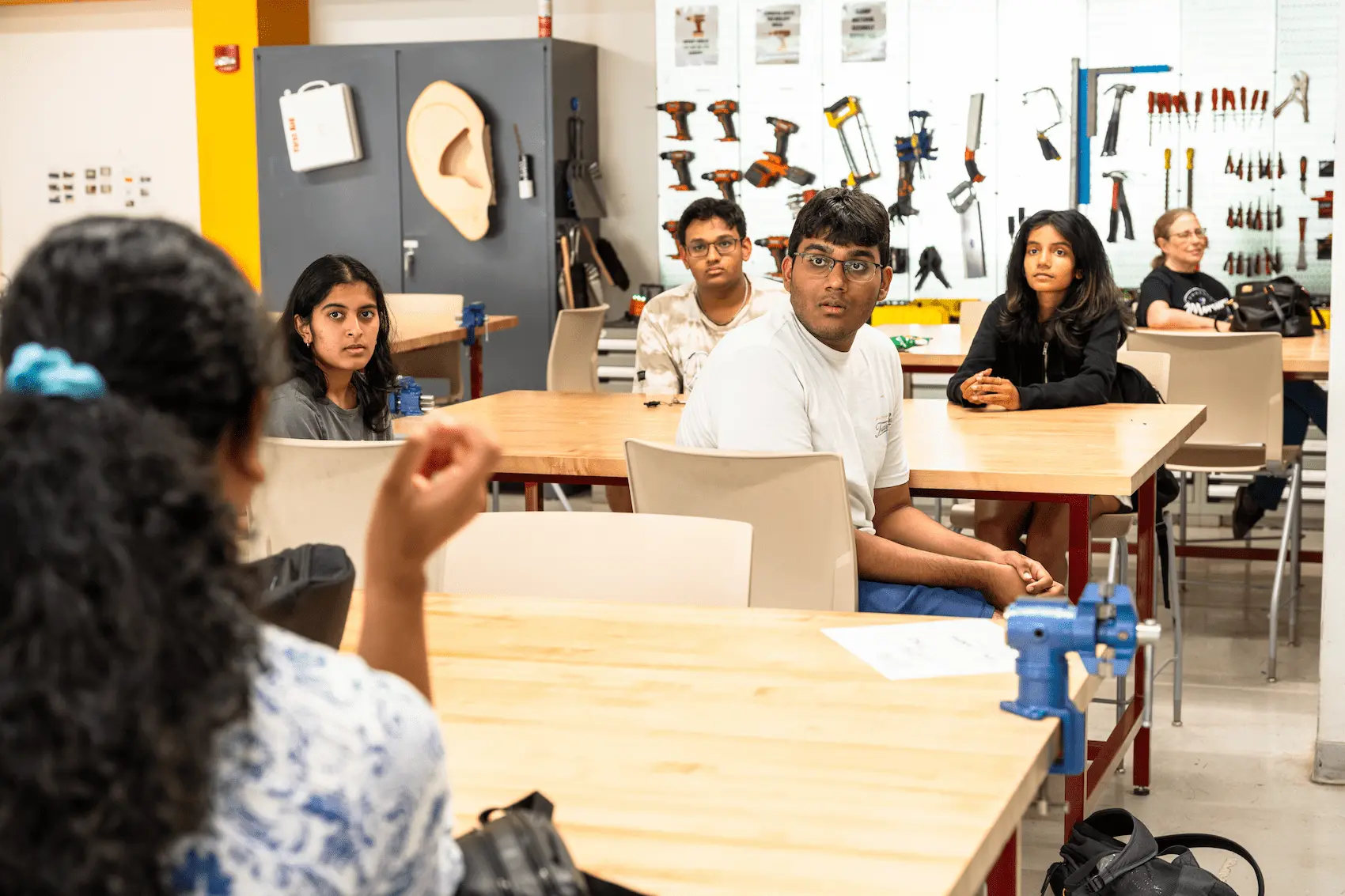
What Makes a Hackathon a Hackathon for Social Good
It starts with a real nonprofit problem
Every project at Opportunity Hack begins with a problem statement from a real 501(c)(3) nonprofit. No fictional case studies, no "imagine if" scenarios. Teams are matched 4-8 weeks before the event so they can scope the problem, talk to the nonprofit's stakeholders, and arrive at the hackathon ready to build — not ready to brainstorm.
It produces software that ships
Hackathon prototypes that die on Sunday afternoon don't help nonprofits. Our Founding Engineer program pairs successful weekend projects with developers who continue working in the weeks and months after — deploying to production, fixing bugs, training nonprofit staff. The work doesn't stop when the hackathon does.
It scales the volunteer engineering model
Each event recruits more developers into ongoing volunteer roles. Senior engineers become mentors. Mentors become judges. Judges become sponsors who fund the next event. The hackathon itself is a recruiting funnel for sustained volunteer engineering — that's why the impact compounds across years.
How the Hackathon Actually Works
A weekend at Opportunity Hack looks like a standard hackathon on the surface — code, food, demos, prizes. The differences are in the structure: pre-event scoping, in-event mentor depth, and post-event continuation. Here's the timeline of an OHack event.
4-8 weeks before: matching
Nonprofits submit problem statements. Volunteer engineers sign up to hack, mentor, or judge. The OHack team matches projects to teams based on skills, interest, and team size. Stakeholder calls happen so the team understands the nonprofit's real workflow before code starts.
Friday evening: kickoff
Teams meet in person (or remote for online events). Nonprofit stakeholders introduce their problem statement. Mentors circulate. Setup, scoping, and the first commits happen. Most teams sleep that night.
Saturday & Sunday: building
~36 hours of focused work. Mentors are present continuously — both senior engineers (architecture, debugging) and domain experts (nonprofit operations, accessibility, security). Judges arrive Sunday afternoon for live demos.
Sunday night through the following weeks: shipping
Live demos on Sunday. Awards by category (Scope / Documentation / Polish / Security — see our judging criteria). Top projects enter the Founding Engineer program for ongoing development. Nonprofits start using the prototypes. The work continues.
Past Event Highlights
A decade of social-good hackathons looks like this:
3,000+
Developers, designers, engineers
200+
Nonprofits served
2013
Year founded
Opportunity Hack started as a single weekend at Arizona State University in 2013. By 2024 it had become one of the largest social-good hackathons in the country — and the longest-running. Past projects include case-management platforms for homelessness services, donor tracking dashboards for grassroots nonprofits, volunteer scheduling tools used week after week by 50+ organizations, and impact-reporting pipelines that gave nonprofit boards their first real visibility into program outcomes.
The events themselves have ranged from intimate weekend hackathons of 60 developers to flagship fall events with 400+ participants. Format has shifted across in-person, hybrid, and online — but the core model (real nonprofit problem statements, mentor-rich support, post-event Founding Engineer follow-on) has stayed constant. That's the model that has actually shipped software to the people who need it.
What Makes Opportunity Hack Different
Real nonprofits, not hypothetical ones
Every team builds for a real 501(c)(3) with a real operational problem. Stakeholders are reachable during the hackathon. The team knows whether their work will actually be deployed because the deployment plan is part of the project from day one.
Senior mentor density
Most hackathons have 1 mentor per 10 teams. Opportunity Hack runs 1 mentor per 2-3 teams, with mentors drawn from senior engineers, technical PMs, and nonprofit-tech veterans. That ratio is why beginner teams ship working code at OHack when they wouldn't elsewhere.
Post-hackathon continuation
The Founding Engineer program is the half of OHack that other hackathons don't have. Top projects pair with one or two engineers who continue building for weeks or months. That's the difference between a prototype and a deployed system.
Open-source rubric
Our 4-category judging rubric (Scope, Documentation, Polish, Security) is designed to identify projects that ship — not just projects that demo well. Other hackathons have copied our rubric over the years; we open-source it freely.
Fall 2026 Hackathon for Social Good
November 14-15, 2026 — Arizona State University, Tempe, AZ. The annual flagship event. Registration opens 8 weeks in advance for hackers, judges, mentors, and sponsors.
How to Participate
For developers
Whether you're a senior engineer or first-time hackathon participant, OHack has a role. Beginner teams are paired with senior mentors. Senior engineers can stretch by tackling harder projects or volunteering as Founding Engineers post-event.
Join the HackathonFor mentors and judges
Senior engineers, technical PMs, and design leaders can volunteer as mentors (in-event guidance) or judges (project evaluation). Both are unpaid; both count toward most employer ESG / volunteer-time programs.
Apply to Judge or MentorFor sponsors
Companies can fund the model — sponsorship keeps the event free for nonprofits and developers. Sponsorship tiers include dedicated mentor/judge slots and recruiting access. Many sponsors return year over year.
Become a SponsorFrequently Asked Questions
A hackathon for social good is an event where teams build software addressing a charitable, civic, environmental, or community problem — typically for a nonprofit, NGO, or public-sector organization. Opportunity Hack runs the longest-running version of this format in the US, with the distinguishing feature that projects continue past the hackathon weekend through our Founding Engineer program.
The annual flagship hackathon for social good is November 14-15, 2026 at Arizona State University in Tempe, AZ. Registration opens roughly 8 weeks before the event. Smaller and more frequent online events also happen throughout the year.
No. Opportunity Hack runs with a high mentor-to-hacker ratio (roughly 1:3) specifically so beginner developers can ship real working code. About a third of our participants in any given event are at their first hackathon. Senior engineers handle architecture and debugging; beginners contribute code, design, and project work alongside them.
Yes — for hackers, mentors, judges, and nonprofits the event is free. Food, swag, and event infrastructure are funded by corporate sponsors. Travel and accommodations are the participant's responsibility, though regional participants typically can attend without travel.
Successful projects enter our Founding Engineer program — one or two volunteer engineers continue working with the nonprofit for weeks or months after the event, deploying the project to production, fixing bugs, and training the nonprofit's staff. Some projects deploy as-is from the hackathon weekend; others take 4-12 weeks to reach production.
Yes — sponsorship is the primary funding model. Tiers range from category-prize sponsorship to full event title sponsorship. Sponsors get logo presence, dedicated mentor/judge slots for their teams (a popular professional development perk), and recruiting access to participants. See sponsorship details at /sponsor.
Whatever the team picks. We don't mandate a stack. Most teams use a web stack (React/Next.js, Node, Postgres, etc.) because that's what nonprofits can host most cheaply, but mobile, data-pipeline, and even hardware projects have shipped at past events. The judging rubric is technology-agnostic.
Corporate hack-for-good events are typically internal, single-company, with employees building speculative ideas. Opportunity Hack is external and cross-company, with developers from many organizations building for actual nonprofit clients. The depth of mentor support, the post-event continuation program, and the 13-year track record are also distinguishing.
Ready to Join a Hackathon for Social Good?
Pick the path that fits — there's a role at the next Opportunity Hack hackathon for developers, mentors, judges, sponsors, and nonprofits.
To empower students, professionals, and nonprofits to collaboratively create sustainable tech solutions that drive social impact and foster learning.
To build a global community where individuals can accelerate their career growth while making a lasting impact for nonprofits.
- What's Opportunity Hack?
- Sponsor Social Good
- FAQ
- Our History
- Join Us on Slack
- Privacy Policy
- This website is a public good.
Fork this on GitHub c52059b